I remember May Bloom Day, my first of 2023, like it was yesterday. How can it be almost fall again? Melancholy abounds. Summer is by far my favourite season here in New Hampshire, when daytime temps tend to be in the 70°s and 80°s. The cat and I are already mourning the return of the chill; he is now loaflike some evenings, conserving body heat.
Here are the temps for the last 31 days, from 16 Aug to today, 15 Sept.:
- Highs averaged 73.5°F, with the highest temperature on 7 Sept, 87.3°F.
- Lows averaged 57.9°F, with the lowest temperature on 1 Sept, 46.6°F.
- Rainfall over the 31-day period was 6.23 inches, which is more than 80% above our average rainfall for this area of about 3.4 inches for the period.
This summer here has felt (and was, in terms of data) cool and wet; the most summery aspects for me were going to the beach in Delaware for a week in late August and the week when I returned home, which was mostly in the mid-80s. Bliss.
Most people’s vegetable gardens in this area were lackluster, to say the least, due to lack of warmth, lack of sun, and abundance of rot, slugs, and snails. Most of my tomatoes haven’t ripened and probably won’t now. The green beans and shelling beans, which I replanted three times, never grew above a couple of inches before slugs took them out. I’m glad I didn’t bother with cucumbers, peppers, or other heat-loving veggies this year. At least the garlic, harvested in July, was an abundant and healthy crop. The kale was initially eaten by slugs but over the last month or so has been hearty and healthy. And the hazelnuts, which look kind of like flowers on the shrubs and which I harvested this week, were more abundant than ever, and, bonus, they had not been eaten by smaller mammals before I got to them.

Most perennials have loved or been unbothered by this cool wet weather: cardinal flower, jewelweed, most grasses (surprisingly), buddleia (butterfly bush), Joe Pye weed, hostas, chelone (turtlehead), hydrangeas (they love it!), goldenrod, filipendula, woodland sunflower, clethra (sumersweet), gentian, gaillardia, morning glories, phlox, geraniums, asters – which are just starting to bloom now, and others. But zinnias and gazanias, both annuals, have been continually eaten by slugs and snails, as have milkweeds. And while echinacea and monarda (bee balm) have grown and bloomed, I feel like they were more lackluster in both colour and staying power than usual.
With that long late summer preamble, on to the blooms.
GOLDENRODS EVERYWHERE, STILL!
Blue-stem, common wrinkleleaf, flattop goldentop, and probably others. Pollinators love it.


FRONT YARD


bee balm (monarda)


geranium


asters — wild and hybrid (Aster laevis ‘Bluebird’) — are just getting going


Other front yard bloomers


SIDE YARD & VEGETABLE GARDEN


cardinal flower


buddleia (‘Ellen’s Blue’ butterfly bush)


Japanese anemone ‘Curtain Call’


Other side yard flowers
Gaillardia, nasturtiums, bumblebee at tomato flowers (today). petunia, borage, aster, morning glory, Kirengeshoma (yellow wax bells)


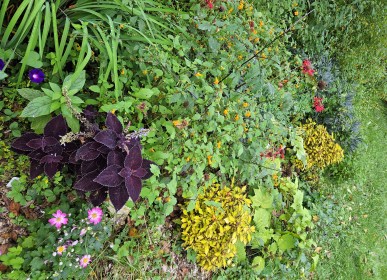
Loving the coleus this year.


BACK YARD
Monarchs and fritillaries on the Joe Pye weed is the big story in the back now, and some grape vines that someone else might have planted. The smell of purple grape gum is overwhelming!


grapes


mostly monarchs on Joe Pye weed


angelica (the volunteer is blooming much later than the others)


willow gentian


other back yard blossoms
Pee gee hydrangea, bumblebee in evening primrose, ‘Painter’s Palette’ persicaria leaf, magenta and white phlox, echinaceas with bumblebees and fritillary


SHADE GARDEN


ROCK WALL


FRUIT GUILD


See you one last time this year, in October, for asters, perennial mums, and whatever else lasts.
Garden Bloggers’ Bloom Day is hosted by Carol at May Dreams Gardens. (She’s in USDA hardiness zone 6a in Indiana and I’m in zone 4b/5a in New Hampshire.)


Leave a Reply